
**The ADM705ANZ: A Comprehensive Guide to its Function and Circuit Design**
In the realm of electronic design, ensuring system stability and preventing catastrophic failures due to unpredictable power conditions is paramount. This is where supervisory circuits, or microprocessor reset circuits, become indispensable. The **ADM705ANZ from Analog Devices** stands as a quintessential component in this category, providing a robust and reliable solution for monitoring power supply voltages and managing microprocessor reset functions.
**Core Functionality: What Does the ADM705ANZ Do?**
At its heart, the ADM705ANZ is a **microprocessor supervisory circuit** designed to perform three critical functions:
1. **Power Supply Monitoring and Reset Generation:** The primary role of the ADM705ANZ is to monitor the system's VCC power supply. It asserts a reset signal to the microprocessor whenever VCC drops below a predefined threshold (typically 4.65V for the 5V version). This reset signal remains asserted for a fixed period (typically 200ms) *after* VCC has risen back above the threshold, ensuring the microprocessor and the entire system have stabilized before beginning operation. This prevents erratic code execution during power-up, power-down, or brownout conditions.
2. **Manual Reset Input:** The IC features a **active-low manual reset input (MR)**, allowing a user or another circuit to initiate a reset cycle on demand. This is invaluable for debugging or providing a hardware-based restart button for the system.
3. **Watchdog Timer:** A crucial feature for enhancing system reliability is the integrated **watchdog timer**. The microprocessor must periodically toggle the **watchdog input (WDI)** before a preset timeout period (typically 1.6 seconds) elapses. If the microprocessor fails to do so—indicating that it has crashed or locked up—the ADM705ANZ will assert a reset signal, forcing the system to restart and recover to a known good state.
**Internal Circuit Design and Pinout**
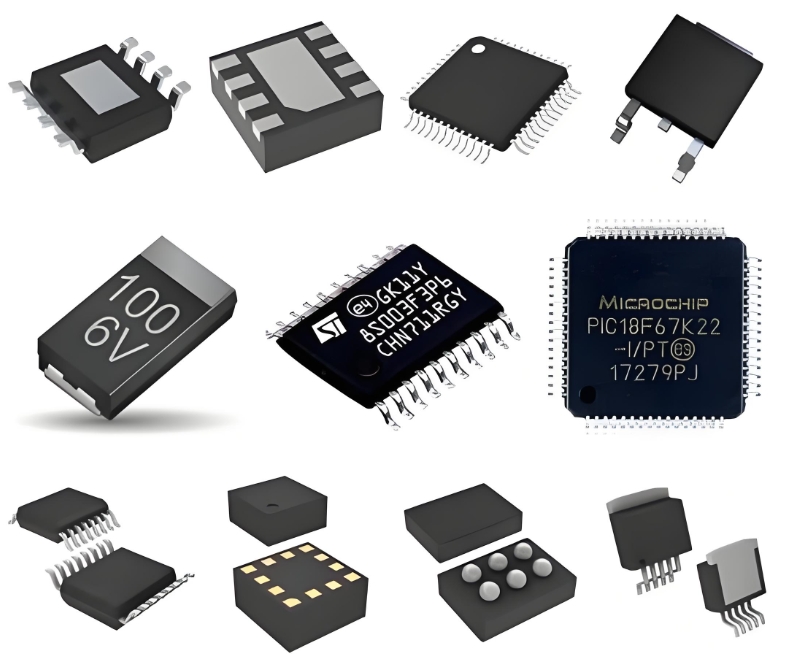
The ADM705ANZ integrates several sophisticated analog and digital circuits into a single 8-pin DIP or SOIC package.
* **Pin 1 (MR):** Manual Reset Input. Pulling this pin low initiates an immediate reset.
* **Pin 2 (VCC):** Positive Power Supply. The pin being monitored.
* **Pin 3 (GND):** Ground.
* **Pin 4 (PFI):** Power-Fail Input. This input to an internal comparator can be used to monitor a secondary voltage rail or generate an early warning power-fail signal.
* **Pin 5 (PFO):** Power-Fail Output. This active-low output goes low when the voltage at PFI drops below its reference (typically 1.25V).
* **Pin 6 (WDI):** Watchdog Input. This pin is monitored by the internal timer; a transition on this pin resets the watchdog.
* **Pin 7 (RESET):** Active-Low Reset Output. This is the main output that holds the microprocessor in reset.
* **Pin 8 (WDO):** Watchdog Output. This active-low output goes low upon a watchdog timeout. It can be used to signal other parts of the system or can be tied to MR for a guaranteed reset pulse.
The internal design consists of a **precision voltage reference**, comparators for monitoring VCC and the PFI input, a **reset timeout generator**, and the watchdog timer logic.
**Typical Application Circuit Design**
Implementing the ADM705ANZ in a circuit is remarkably straightforward, which is a key factor in its popularity. A basic connection diagram for a microprocessor (μP) system involves:
1. **Power and Ground:** Connect VCC (Pin 2) to the system's +5V rail and GND (Pin 3) to the common ground.
2. **Reset Connection:** Connect the **active-low RESET output (Pin 7)** directly to the reset pin of the microprocessor.
3. **Manual Reset:** Connect a simple push-button switch between ground and the MR pin (Pin 1). A pull-up resistor (typically 10kΩ to 100kΩ) is connected from MR to VCC to keep the pin high during normal operation.
4. **Watchdog Timer:** Connect the WDI pin (Pin 6) to a general-purpose I/O (GPIO) pin of the microprocessor. The system firmware must be designed to toggle this GPIO line within the watchdog timeout window.
5. **Power-Fail Monitor (Optional):** A voltage divider can be connected from a higher or unregulated voltage rail (e.g., 12V) to the PFI pin (Pin 4). The divider ratio is set so that when the 12V rail begins to fall, the voltage at PFI drops below 1.25V, causing PFO (Pin 5) to go low. This signal can be connected to a non-maskable interrupt (NMI) on the μP, giving it advanced warning of an impending power loss to execute critical shutdown procedures.
ICGOODFIND: The ADM705ANZ is a highly integrated and **essential component for ensuring system reliability**. Its combination of **precision voltage monitoring**, a **watchdog timer**, and manual reset capability in a simple 8-pin package makes it an ideal choice for a vast array of microcontroller-based applications, from industrial controls to consumer electronics, safeguarding against the uncertainties of the power supply and software execution.
**Keywords: Microprocessor Supervisory Circuit, Reset Generator, Watchdog Timer, Power Supply Monitoring, Brownout Protection**

