NXP PCA9670PW: A Comprehensive Technical Overview of the 16-bit I2C-bus and SMBus I/O Expander
In the realm of embedded systems and hardware design, efficiently managing a multitude of digital input/output (I/O) lines is a common challenge. The NXP PCA9670PW addresses this need as a 16-bit I/O expander that leverages the ubiquitous I2C-bus (Inter-Integrated Circuit) and SMBus (System Management Bus) protocols. This device provides a simple and cost-effective solution for extending the I/O capabilities of a primary host controller, making it an indispensable component in a wide array of applications.
Architecture and Core Functionality
The PCA9670PW is housed in a TSSOP24 package and is designed to serve as a remote I/O port for microcontrollers and processors. Its core consists of a 16-bit quasi-bidirectional I/O port. Quasi-bidirectional ports are a key feature, meaning each pin can be used as an input or output without requiring a separate control register to define the data direction. This simplifies software control, as reading the port register returns the actual logic level on the pin, whether it is configured by an external signal or an internal output.
The device communicates with a host controller via a serial I2C-bus/SMBus interface. This two-wire interface (SDA and SCL) drastically reduces the number of GPIO pins required on the host microcontroller, freeing them up for other critical tasks. The PCA9670PW supports standard-mode (100 kHz) and fast-mode (400 kHz) I2C-bus protocols, ensuring compatibility with a vast majority of microcontrollers on the market.
Key Features and Advantages
Simplified Control: Unlike its predecessors (like the PCA9555), the PCA9670 eliminates the need for an internal data direction register. This reduces the command set and simplifies the software driver, as writing to the port sets the output value and reading from it returns the input status.
Low Power Consumption: The device is optimized for low-power applications, a critical requirement for battery-operated devices. It features very low standby current consumption.
High Noise Immunity: With high noise immunity on the I/O port pins, the device performs reliably in electrically noisy environments, which is essential for industrial control applications.
5V Tolerant I/Os: The I/O ports are 5V tolerant, even when the device is operating at a lower VDD voltage (e.g., 2.3V to 5.5V). This allows it to interface directly with devices running at different logic levels without needing external level shifters.
Three Hardware Address Pins: The three address pins (A0, A1, A2) allow for up to eight PCA9670 devices to be connected on the same I2C-bus, enabling the expansion of up to 128 I/O bits from a single two-wire bus.
Application Scenarios
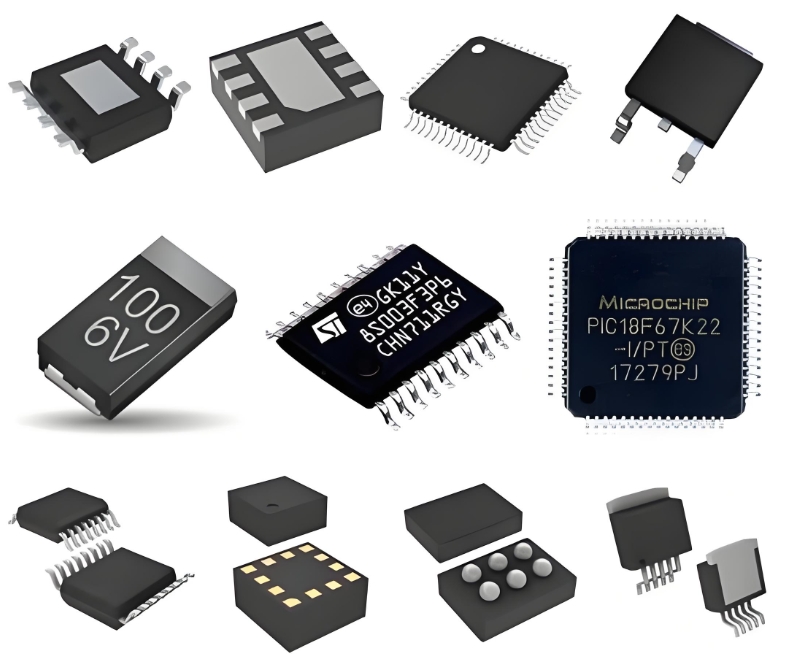
The versatility of the PCA9670PW makes it suitable for a broad spectrum of applications, including:
Industrial Control: Controlling buttons, switches, LEDs, and sensors in PLCs and control panels.
Consumer Electronics: Expanding I/Os in smart appliances, gaming consoles, and set-top boxes.
Telecom Systems: Monitoring status signals and controlling indicators in servers and network routers.
Automotive Electronics: While not for safety-critical systems, it can be used for interior lighting control or switch monitoring.
ICGOODFIND Summary
The NXP PCA9670PW stands out as an exceptionally user-friendly and robust I/O expansion solution. Its elimination of the data direction register, combined with its 5V tolerance, high noise immunity, and simple I2C-bus interface, offers engineers a highly effective method to overcome GPIO limitations. It is an ideal choice for designs prioritizing simplicity, board space reduction, and cost-efficiency.
Keywords:
1. I2C-bus
2. I/O Expander
3. Quasi-bidirectional
4. SMBus
5. 5V Tolerant

