
NXP TJA1042T/3/CM,118: A High-Speed CAN Transceiver for Automotive Network Applications
The evolution of modern vehicles into complex, software-defined machines is fundamentally reliant on robust and reliable in-vehicle networking. At the heart of these communication systems lies the Controller Area Network (CAN), a proven standard for real-time data exchange between electronic control units (ECUs). The NXP TJA1042T/3/CM,118 represents a key enabler in this domain, serving as a high-speed CAN transceiver that forms the critical interface between a microcontroller's protocol controller and the physical CAN bus.
This transceiver is engineered to meet the stringent requirements of the automotive industry, offering superior electromagnetic compatibility (EMC) and very low electromagnetic emission (EME). These characteristics are paramount in the electrically noisy environment of a car, where numerous electronic systems must operate without interfering with one another. Furthermore, the device boasts excellent electrostatic discharge (ESD) protection, safeguarding the sensitive microcontroller and the transceiver itself from voltage spikes that can occur during manufacturing or in everyday operation.
A standout feature of the TJA1042T/3/CM,118 is its low-power management capability. It supports multiple power modes, including a Standby mode with wake-up capability via the bus. In this mode, the device draws minimal current, making it ideal for applications connected to always-on ECUs in vehicles that require power-saving functionality for features like partial networking or keyless entry systems. The bus wake-up feature allows the network to remain dormant until a specific message is detected, at which point the transceiver can alert the host microcontroller to resume full operation.
The device is fully compliant with the ISO 11898-2:2016 standard, ensuring interoperability with other CAN transceivers in the market. It also offers advanced failure mode management, including thermal shutdown and passive behavior on loss of power on the VCC supply, which helps prevent the device from blocking the CAN bus in case of a local ECU failure. This fail-safe design is critical for maintaining overall network integrity.
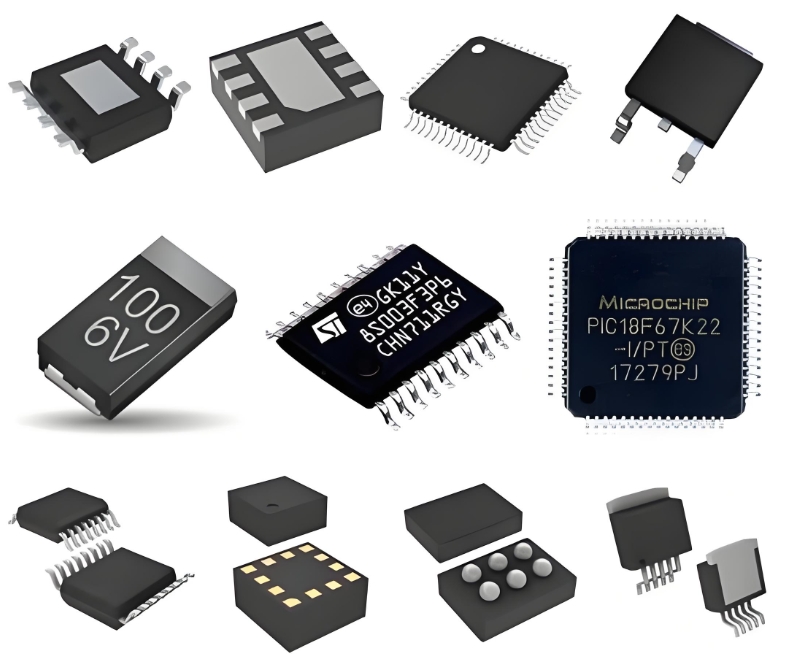
Typical applications extend throughout the vehicle, including:
Body Control Modules (BCMs)
Gateway and central ECU systems
Instrument clusters and advanced driver-assistance systems (ADAS)
Powertrain and chassis applications
ICGOODFIND SUMMARY: The NXP TJA1042T/3/CM,118 is a premier high-speed CAN transceiver that delivers the robustness, low power consumption, and high reliability demanded by next-generation automotive networks. Its advanced feature set makes it an optimal solution for designers building resilient and efficient communication links between ECUs.
Keywords: CAN Transceiver, Automotive Networking, Low-Power Mode, EMC Performance, ESD Protection.

